Moderator: Shitong Yuan, Huawei Technologies, China
Organizer: Shitong Yuan, Huawei Technologies, China
Panelists:
-
Junling Li, Southeast University, China
-
Yong Zeng, Southeast University, China
-
Wejie Yuan, Southern University of Science and Technology, China
Motivation and Background:
Digital Twins (DTs) are poised to transform wireless networks by enabling real-time synchronization between physical environments and their virtual counterparts. This panel explores how wireless DTs empower environment-aware systems to dynamically optimize communication and sensing in complex scenarios (e.g., urban canyons, smart factories, vehicular networks).
Questions:
-
DT-Driven Adaptation: How high-fidelity DTs enhance beamforming, blockage prediction, and resource allocation by modeling environmental dynamics (mobility, weather, obstacles)?
-
Sensing-Communication Synergy: The role of Integrated Sensing and Communication (ISAC) in reducing DT’s sensing overhead while maintaining accuracy?
-
AI/ML Integration: Efficient algorithms for real-time DT updates from multi-modal sensor data (LiDAR, radar, mmWave)?
-
Industrialization Challenges: Scalability, latency, and cost trade-offs in deploying DTs for 5G-Advanced/6G networks?
-
DT-based RAN Architecture: DT-based RAN architecture design, PHY and MAC layer protocol design?
Panelist Biographies:
|
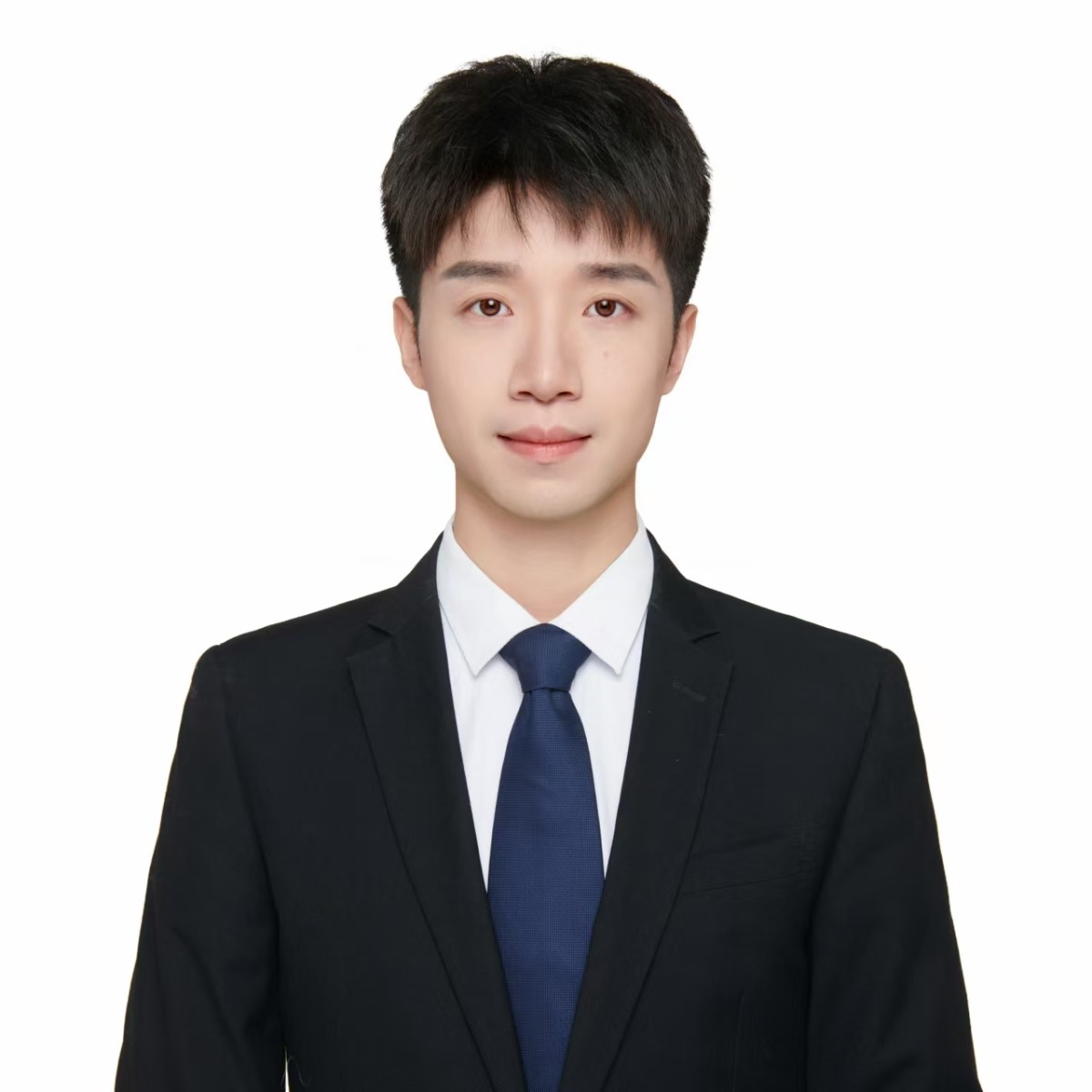
Shitong Yuan is principal engineer of Wireless Communications, Huawei Technologies. He received his B.S. from University of Electronic Science and Technology of China in 2008 and Ph.D. degrees from University of Texas at Arlington in 2016. He joined Huawei Technologies in 2017 and from 2024 to 2025, he was the project manager and technical leader of Huawei internal Next generation Waveform project studying waveforms for wireless communication as well as sensing. Since 2021, he is one of the key technical leaders on 5G air interface design and the related 3GPP standardization in Huawei, focusing on mmWave, IAB and MIMO. Now he is leading the next generation waveform, sensing and positioning study in Huawei. His research interests include novel 6G use cases and key capabilities such as collaborative robotics, new enabling technologies and architectures such as integrated sensing and communication (ISAC), wireless digital twin and corresponding new usage scenarios. |

|
Junling Li (Member, IEEE) received the B.S. degree from Tianjin University, Tianjin, China, in 2013, the M.S. degree from Beijing University of Posts and Telecommunications, Beijing, China, in 2016, and the Ph.D. degree from the Department of Electrical and Computer Engineering, University of Waterloo, Waterloo, ON, Canada, in 2020. She was a Joint Post-Doctoral Research Fellow at Shenzhen Institute of Artificial Intelligence and Robotics for Society (AIRS), University of Waterloo, and Chinese University of Hong Kong, Shenzhen, from 2020 to 2022. She is currently an Associate Professor at the National Mobile Communications Research Laboratory, Southeast University, Nanjing, China. Her research interests include digital twin, channel modeling, game theory, and machine learning-based channel prediction. She received the Best Paper Award at the IEEE ICCC 2019, ICCT 2023, and ICC 2025. |
|
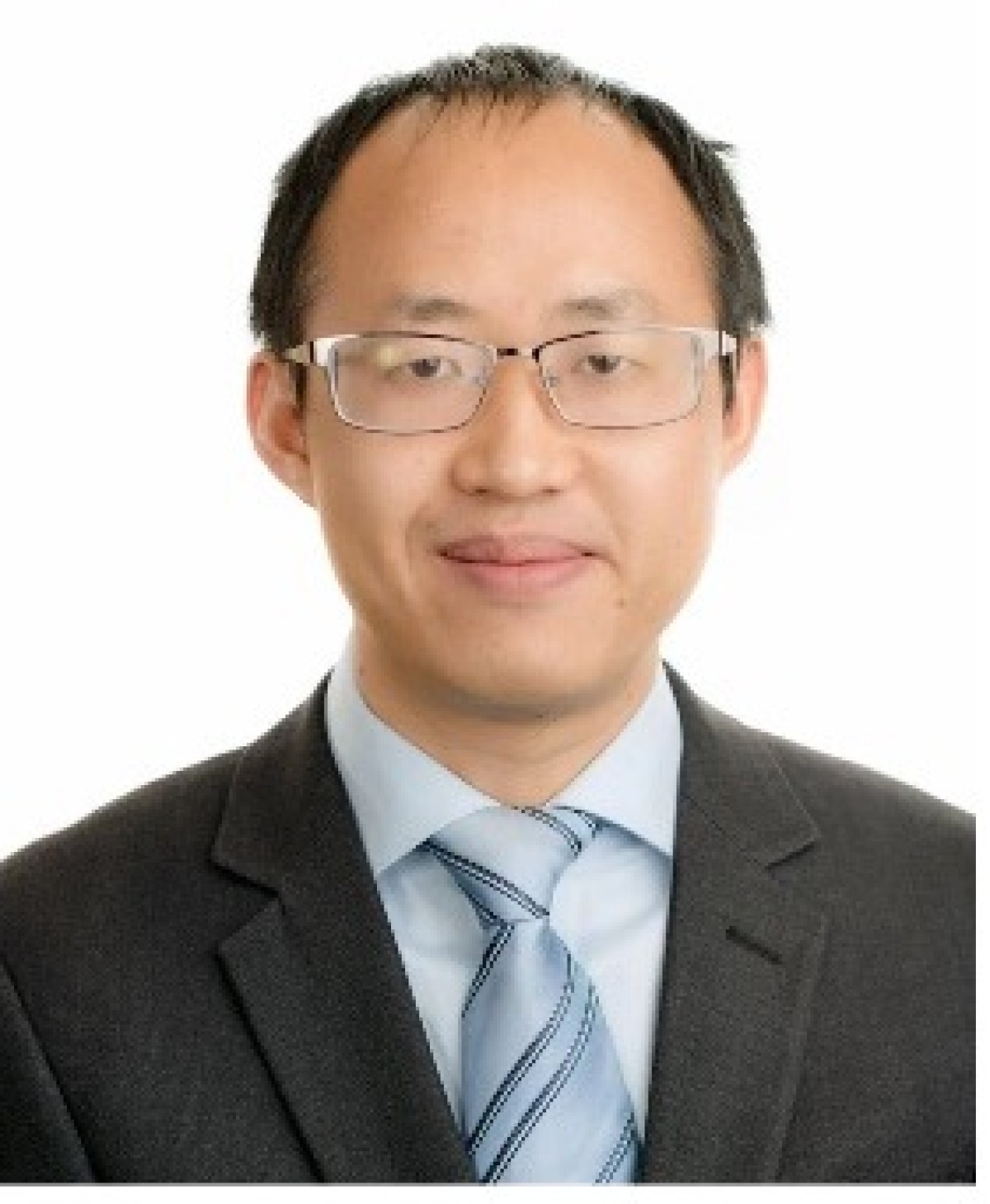
Yong Zeng (Fellow, IEEE) received the Bachelor of Engineering (Hons.) and Ph.D. degrees from Nanyang Technological University, Singapore.,He is a Chief Young Professor with the National Mobile Communications Research Laboratory, Southeast University, China, and also with Purple Mountain Laboratories, Nanjing, China. From 2013 to 2018, he was a Research Fellow and a Senior Research Fellow with the Department of Electrical and Computer Engineering, National University of Singapore. From 2018 to 2019, he was a Lecturer with the School of Electrical and Information Engineering, The University of Sydney, Australia. He has published more than 200 papers, which have been cited by more than 36 000 times based on Google Scholar. He was elevated to an IEEE Fellow “for contributions to unmanned aerial vehicle communications and wireless power transfer.” He was a recipient of the Australia Research Council (ARC) Discovery Early Career Researcher Award (DECRA), the 2020 and 2024 IEEE Marconi Prize Paper Award in Wireless Communications, the 2018 IEEE Communications Society Asia–Pacific Outstanding Young Researcher Award, the 2020 and 2017 IEEE Communications Society Heinrich Hertz Prize Paper Award, the 2021 IEEE ICC Best Paper Award, and the 2021 China Communications Best Paper Award. He was listed as a Highly Cited Researcher by Clarivate Analytics for seven consecutive years (2019–2025). He is the Symposium Chair of IEEE Globecom 2021 Track on Aerial Communications, the Workshop Co-Chair of ICC 2018–2023 Workshop on UAV Communications, and the Tutorial Speaker of Globecom 2018/2019 and ICC 2019 tutorials on UAV communications. He has proposed the concept of channel knowledge map (CKM) and the transmission method of delay-Doppler alignment modulation (DDAM). He serves/served as an Associate Editor for IEEE Transactions on Communications, IEEE Transactions on Mobile Computing, IEEE Communications Letters, and IEEE Open Journal of Vehicular Technology; a Leading Guest Editor for IEEE Wireless Communications Special Issue on Integrating UAVs into 5G and Beyond and China Communications Special Issue on Network-Connected UAV Communications. |

|
Weijie Yuan (Senior Member, IEEE) ‘s research interests include Integrated Sensing and Communications (ISAC), Orthogonal Time Frequency Space (OTFS), and the Low-Altitude Wireless Networks (LAWN). He currently serves as the Deputy Editor-in-Chief of the Journal of Advances in Signal Processing. He is an Editor for the IEEE Transactions on Communications, IEEE Transactions on Wireless Communications, IEEE Transactions on Mobile Computing, IEEE Communications Magazine, IEEE Communications Standards Magazine, IEEE Transactions on Green Communications and Networking, IEEE Communications Letters, IEEE Open Journal of Communications Society, and npj Wireless Technology. He has led four special issues in IEEE Transactions on Vehicular Technology, IEEE Transactions on Network Science and Engineering, IEEE Journal of Selected Topics in Signal Processing, and China Communications. He was a Guest Editor for IEEE Internet of Things Journal and IEEE Open Journal of Vehicular Technology. He is serving/served as the the General Co-Chair for ISWCS 2026, Symposium Co-Chair for IEEE/CIC ICCC 2026, and Track Co-Chair for IEEE ICC 2025 and IEEE VTC 2025-Spring. He served as an Organizer/the Chair of several workshops and special sessions in flagship IEEE and ACM conferences, including IEEE ICC, IEEE VTC, IEEE GlobeCom, IEEE/CIC ICCC, IEEE SPAWC, IEEE WCNC, IEEE ICASSP, and ACM MobiCom. He is the Founding Chair of the IEEE Aerospace and Electronic System Working Group on LAWN and the ComSoc Special Interest Group (SIG) on LAWN. He was a recipient of the Best Editor from IEEE CommL, the Best Paper Award from IEEE ICC 2023, IEEE/CIC ICCC 2023, IEEE GlobeCom 2024, and IEEE GlobeCom 2025, as well as the 2025 IEEE Communications Society & Information Theory Society Joint Paper Award. |